HEADPHONE LAB: An interview with the developers – No more compromises with headphones

Lesezeit 8 min

HEADPHONE LAB: AN INTERVIEW WITH THE DEVELOPERS – NO MORE COMPROMISES WITH HEADPHONES

Does the mix sound perfect on your headphones – but then sound completely different on your speakers? Many artists are familiar with this problem, and that’s exactly where our HEADPHONE LAB software comes in. In this interview, alongside our Director of PRO Audio Martin, our acoustic engineer Jonas provides insights into the technology behind the software, reveals what surprised him during the development process, and what users can look forward to in the future.

In the Interview: Jonas, Acoustic Engineer

TABLE OF CONTENTS

From idea to software

beyerdynamic Blog:How did the idea for HEADPHONE LAB come about? What was the trigger?

Martin: Headphones are playing an increasingly central role in content creation. When producing and editing audio content, headphones must fulfil certain tasks that can only be solved with the help of digital signal processing. One example of this is simulating the acoustic behaviour of studio monitors in a room. This technology makes it possible to recreate realistic sound conditions, thereby making the work of content creators easier.

Against this backdrop, the development of HEADPHONE LAB represents a logical step. The aim is to further establish headphones as the primary monitoring tool and to continually expand their capabilities. The platform is being enhanced with numerous exciting features to optimally meet the demands of modern content creation.

How does a loudspeaker sound – through headphones?

beyerdynamic Blog:What are the technological principles behind the development of the crossfeed model – and what were the biggest challenges in implementing it?

Jonas: A crossfeed model simulates the crosstalk between both channels that occurs during loudspeaker playback, directing it to both ears. With headphone playback, the left ear receives only the signal from the left headphone – whereas with loudspeakers, sound always reaches both ears.

In the simplest case, we assume our anechoic chamber: the crosstalk component here consists solely of the sound emitted by the loudspeaker facing away from the ear – that is, from the right loudspeaker to the left ear and vice versa. This model already helps to pull signals with a strong lateral bias forwards towards the actual loudspeaker position. Externalising mid-range signals such as vocals or bass, on the other hand, is significantly more challenging.

To achieve this, we therefore work with three models: In the free field, we simulate an environment without reflections – the cross-path can be modelled here using a shadowing filter , which attenuates high frequencies from around 1 kHz. In the diffuse field, the filter becomes more complex, as reflections have a greater influence. Finally, the studio environment strikes a balanced middle ground between the two.

This is precisely where the greatest challenge lay: finding the right ‘sweet spot’ – that is, reproducing enough components realistically without overburdening the listening experience with excessive complexity. This is an area we are continuously working on.

Precision down to the last detail

beyerdynamic Blog: How do you achieve precise equalisation and calibration of the various DT models using HEADPHONE LAB?

Jonas: Firstly, we were able to rely on our Golden Samples. For us acousticians, these are the headphones that we define during development as a sonically perfectly tuned specimen. A specimen with a ‘golden’ sound, so to speak. We were able to use these to generate the equalisation curves for each headphone model. That already gets us 95% of the way towards equalising the respective models to our studio target.

The remaining 5% is still missing, as the sound of each individual headphone varies slightly due to tolerances in all acoustic components (for example, the drivers, but above all the acoustic foams or ear pads). Even though these variations are very minimal in our headphone models thanks to high-quality components, they can never be completely avoided.

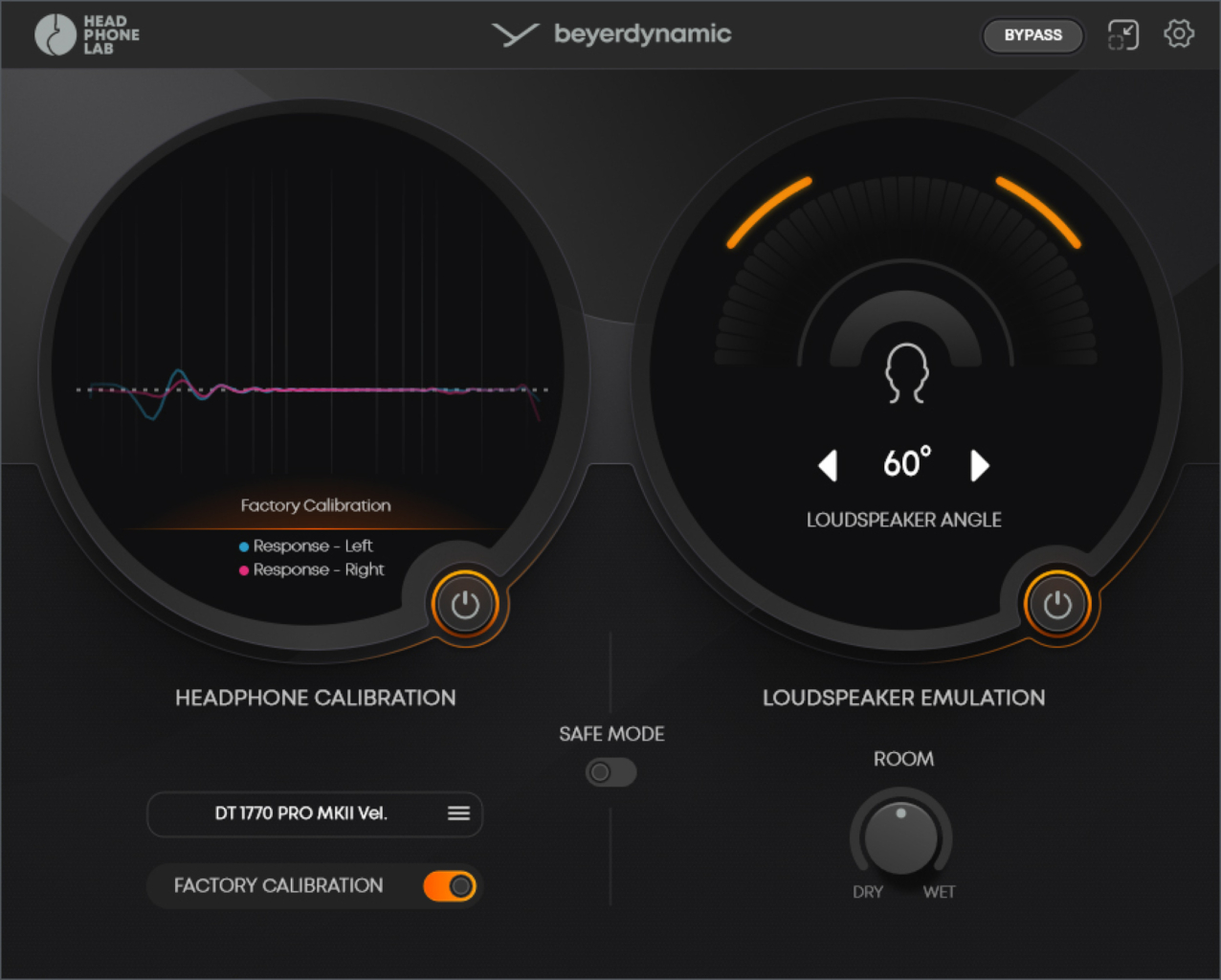
To address this final 5%, we have developed the innovative Factory Calibration feature. Here, we use the measurements taken during production for each individual headphone – based on the serial number – to equalise its deviation from the Studio Target to a level of accuracy that is virtually inaudible.

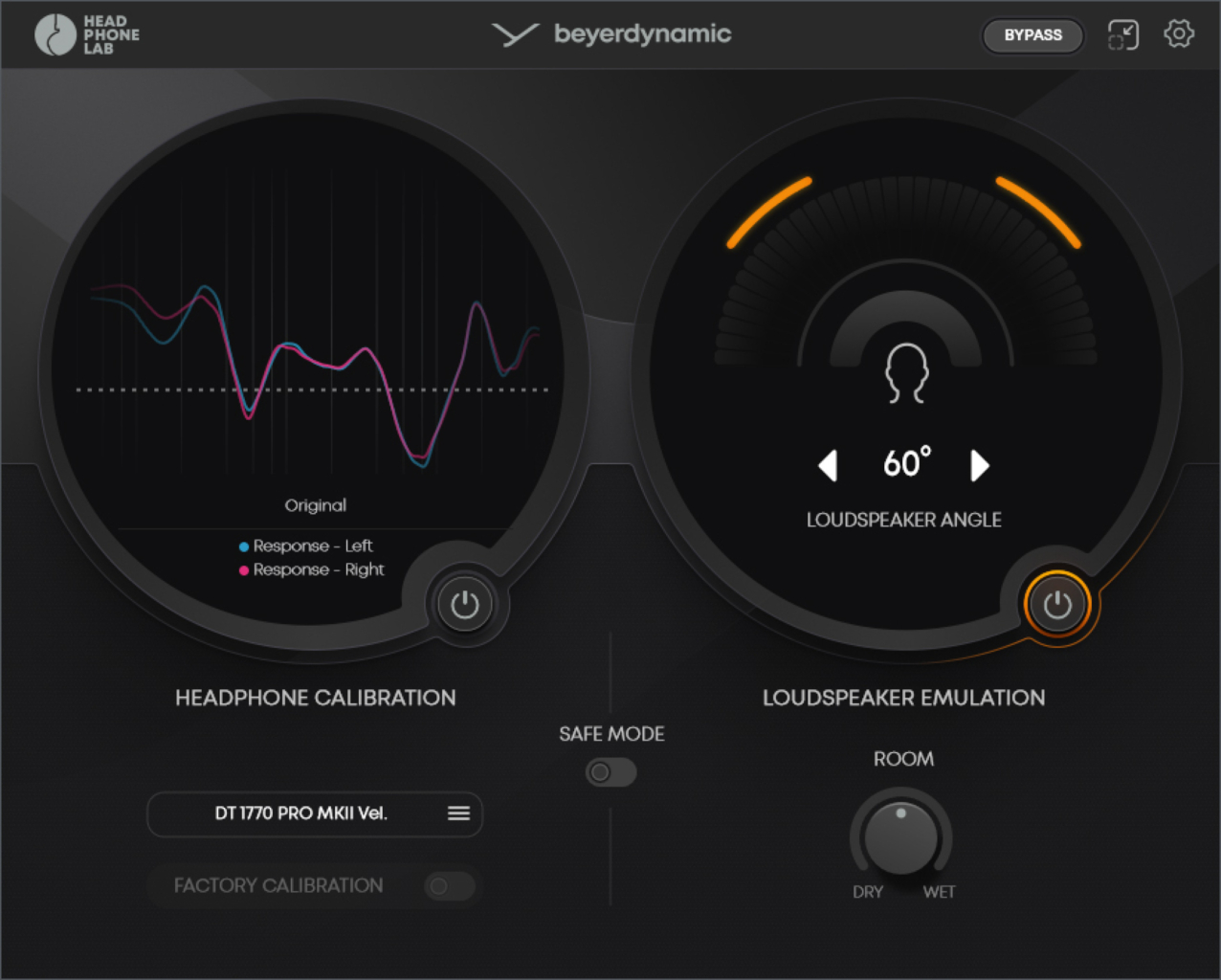
Interface without Factory Calibration
Interface with Factory Calibration

beyerdynamic Blog: What solution does HEADPHONE LAB offer music creators, and who benefits most from this software? 

Jonas: With HEADPHONE LAB, we enable music creators to make reliable mixing and mastering decisions even without a perfectly acoustically treated studio. The aim is for a mix to not only sound good on your own headphones, but also to sound consistently impressive on speakers, in the car or when streaming.

Producers, engineers and content creators who need to work flexibly – for example, on the move, in a home or bedroom studio, or in acoustically challenging spaces – benefit particularly from this. Instead of having to invest several thousand euros in room acoustics and studio monitors, with a pair of DT headphones and HEADPHONE LAB they get a reproducible reference monitoring system that works almost anywhere.

Technically, this is based on two key components:

1. Studio Target calibrates supported DT headphones to a neutral reference suitable for mixing. This makes mixing decisions significantly more reliable and better transferable to other playback systems.

2. The speaker emulation transfers key characteristics of a studio monitor setup to the headphones – in particular, a more natural stereo image and a more realistic sense of space.

The result is a workflow that combines the precision of high-quality headphones with the advantages of traditional speaker monitoring – regardless of the room or location.


beyerdynamic blog Tipp

Studio Target = your headphones as a neutral reference.
Speaker emulation = a spatial speaker experience, anywhere

Built for professionals – tested by professionals

beyerdynamic Blog: It’s fascinating to see how much development work has gone into this project. Were there any surprising insights or turning points during the process that significantly influenced the project?

Jonas: We worked with a focus group very early on in the project, who were able to test the plugin extensively. The focus group provided us with consistently valuable feedback, much of which we were able to incorporate.

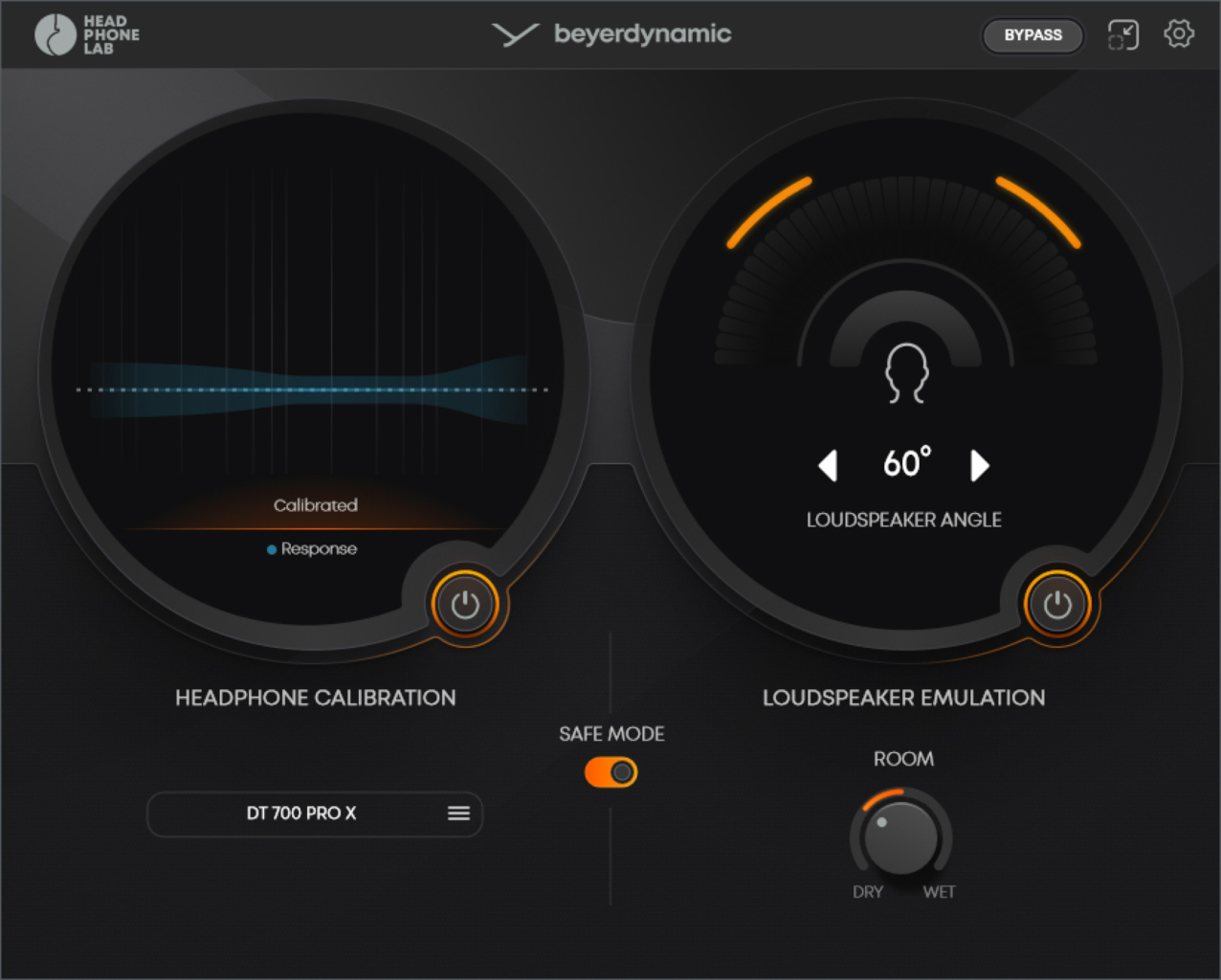
Through ‘field testing’ with our focus group, we tried to fine-tune the room simulation so that, with standard control settings, the room reproduction does not compromise the mixing assessment in as many realistic listening situations as possible. So, for now, we’ve kept our ‘ ’ room simulation fairly subtle; if you turn the ROOM control to the right, the feature is deliberately emphasised a little more so that you get a feel for what’s happening.

beyerdynamic Blog: How does HEADPHONE LAB differ from other virtual monitoring or headphone calibration solutions?

Loudspeaker emulation

Jonas: There is actually a significant amount of research behind HEADPHONE LAB, which is rather inconspicuously hidden in the right-hand section of the plugin, namely the loudspeaker simulation. This also means that binauralisers in general will continue to make great strides forward in the future. Compared to other virtual monitoring solutions, HEADPHONE LAB can draw on a large, verified list of supported headphones. When comparing products, we’ve often noticed that some models aren’t, in our view, adequately equalised.

beyerdynamic Blog: So what is the challenge in this context when it comes to achieving a positive listening experience? 

Jonas: One key aspect of our research was incorporating measured binaural room impulse responses – measured between speakers and an artificial head in the room. In doing so, we observed a well-known effect: the Room Divergence Effect. Binauralisation only sounds natural if the room you’re sitting in is the one being simulated. In smaller rooms, it quickly starts to sound unnatural. That’s why we’ve deliberately incorporated less room content in the current version. We’re already working on solutions such as head tracking.

beyerdynamic Blog: Were there any difficulties in tuning for different headphone impedances or designs?

Jonas: The equalisation is designed for high-quality headphone amplifiers with low output impedance – and works very reliably with them. Headphones such as the DT 1990 PRO MKII benefit particularly from this: thanks to the TESLA.45 system, distortion levels are so low that precise equalisation is possible right down to the lowest frequencies.

beyerdynamic Blog: How did you strike the balance between technical precision and user-friendliness? 

Jonas: The focus group was a huge help here too: the UI went through several concepts and iterations during the development process and was designed to be user-friendly step by step, in collaboration with the testers. In addition, we reviewed and refined the operating logic in internal and external listening and practical tests, as well as during on-site sessions in studios.

beyerdynamic Blog: You mentioned earlier that you received both internal and external feedback during development. How valuable was that for you?

Jonas: Even though many of us in the department are involved with music – whether playing an instrument, listening to music or producing music – we are never as close to the actual product as the professionals who then use the plugin on a daily basis.

The feedback was actually a bit of a surprise to us in some areas, but it did us a disservice when it came to fine-tuning both the UI and the audio features. We will be stepping up this kind of collaboration in future, and I am confident that it will play a key role in delivering great new features for future versions. For us, working with focus groups – and therefore external testers – was very important.

The vision behind HEADPHONE LAB

beyerdynamic Blog: You are constantly developing the software. Which features to date are you particularly proud of?

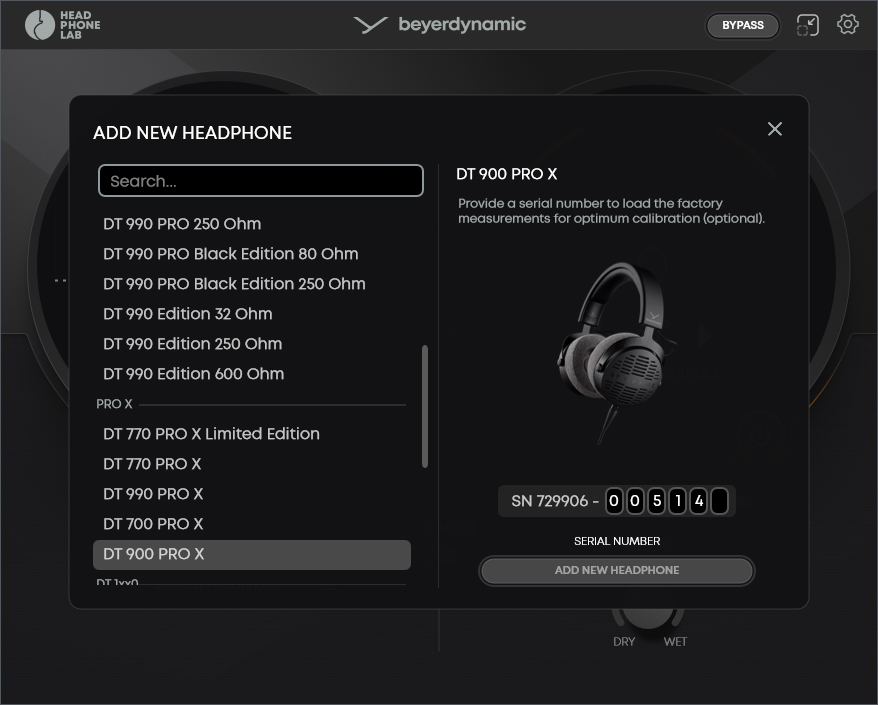
Jonas: Through the continuous development of HEADPHONE LAB, we have not only been able to raise the bar for acoustic precision but also optimise the automated measurement processes in production. The result is FACTORY CALIBRATION, which is unique in the market because it is even more accurate and reliable. In future, more and more headphone models will benefit from this technology.

Factory Calibration using the DT 900 PRO X as an example

beyerdynamic Blog: What developments are planned for the future, and what can HEADPHONE LAB users look forward to?

Jonas: We see the current version as the start of a new era at beyerdynamic. A major part of this new era is that, through intensive research, we have developed a new sound target specifically for audio engineers in studios: the beyerdynamic Studio Target. To achieve this, we conducted listening tests with dozens of audio professionals to develop a studio equivalent to the Harman Target, which has become established in consumer headphones in the past.

On the other hand, we are seeing a major trend whereby more and more music creators are no longer using a speaker setup, or at least headphones are becoming increasingly important. Nevertheless, there have always been good reasons in the past to use a speaker setup for production. For us, this clearly leads to the goal of transferring the advantages of speaker reproduction into the world of headphones. This is achieved primarily through ever-improving binauralisation and externalisation features, as well as our Room Simulation. We will continue to develop this feature consistently, always keeping the goal of the most uncoloured sound possible in mind. Examples include Dolby Atmos integration, revised room simulation, etc.

beyerdynamic Blog: Thank you very much for the candid insights into the development, research and vision behind the software. We are excited to see how HEADPHONE LAB will evolve in the future.

Want to experience what HEADPHONE LAB can do for yourself? Try the software now and discover how your DT headphones become a studio reference. Discover now >

Wie bewertest du diesen Artikel?

Rating: 0 / 5. Anzahl Bewertungen: 0

Did you find this article helpful?